Information Technology Policy
1. Introduction and Policy Statements
1.1 This document sets out the Information Technology (IT) Policy for the protection of IT networks, hardware including portable media, system and application software, communication components, documentation, the physical environment, and other information assets.
1.2 The equipment covered by this policy includes:
· Desktops – Personal Computers (PCs) provided to staff in the course of carrying out their duties.
· Media/Portable Media – Electronic Storage Devices such as pen drives/hard drives provided to staff in the course of carrying out their duties.
· External Communications Infrastructure – Equipment used to connect to the external world including the Wide Area Network, analogue telephone lines, digital telephone lines, leased lines and all related equipment and services.
· Network Infrastructure – The equipment housed internally to provide the IT network, including servers, enclosures, racks, cabling, switches/hubs, Routers, wireless access points, firewalls, proxies, authentication systems, and devices.
1.3 The objective of this policy is to ensure:
· The confidentiality of data and information assets are protected against unauthorized disclosure and incidents are promptly reported.
· Integrity of data and information assets so that they are protected from unauthorized or accidental modification.
· The availability and accessibility of IT systems as and when required by staff.
2. Responsibilities
2.1 Defining responsibilities ensures that all users of IT systems are aware of their responsibilities to minimize the risks to IT security and operations
2.2 The Business Planning department is responsible for ensuring that:
· Electronic filing systems and documentation are well maintained for all.
· No unauthorized staff are allowed to access any IT systems in any location, as such access could compromise data integrity.
· Named individuals are given authority to administrate specific computer systems according to their job function and role following the principle of least privilege.
· All current and new users are instructed in their security responsibilities.
· Procedures are implemented to minimize exposure to fraud, theft or disruption of its systems; these include segregation of duties, dual control and staff rotation in critical susceptible areas.
· Critical job functions to ensure continuity;
2.3. The Human Resources department is responsible for ensuring that:
· All staff sign confidentiality (non-disclosure) undertakings as part of their contract of employment, and any contactors, temporary staff.
· New staff are given basic user training in IT Security as part of their induction.
2.4. Users who do not have administration rights over their issued equipment are responsible for ensuring that:
· No breaches of computer security arise or result from their negligence. Users are specifically reminded to keep all passwords and remote log-in data secure.
· All reasonable care is taken to protect the security of IT equipment they are issued together with confidential data stored on it when taken outside secure offices.
· Sensitive data stored on portable IT equipment is kept to the minimum required for business use and encrypted in order to minimize the risks and impacts should a security breach or loss of that equipment occur.
3. Security
4. Physical Access Control
5. Disposal/Reallocation of Equipment
6. Security Incident Investigation and Reporting
6.1 The objective of security incident investigation is to identify detect, investigate and resolve any suspected or actual computer security breach.
6.1 A security incident is an event that may result in:
· Degraded system integrity
· Loss of system availability
· Disclosure of confidential information
· Disruption of activity
· Financial loss
· Legal action
· Unauthorized access to applications loss of data
6.2 All users must report actual security breaches, or any concerns or suspicions about security breaches, as soon as they arise.
6.3 All actual security incidents will be formally logged, categorized by severity and actions recorded by the IT department, and reported to the Directors.
7. Back-Up of data with Periodic Testing
8. Review

We are committed to provide tailored loan product to the salaried employees. AGIWAL FINANCE PRIVATE LIMITED RBI CORE: B-14.02076
© Copyright 2026 - Agiwal Finance Private Limited. All Right Reserved.
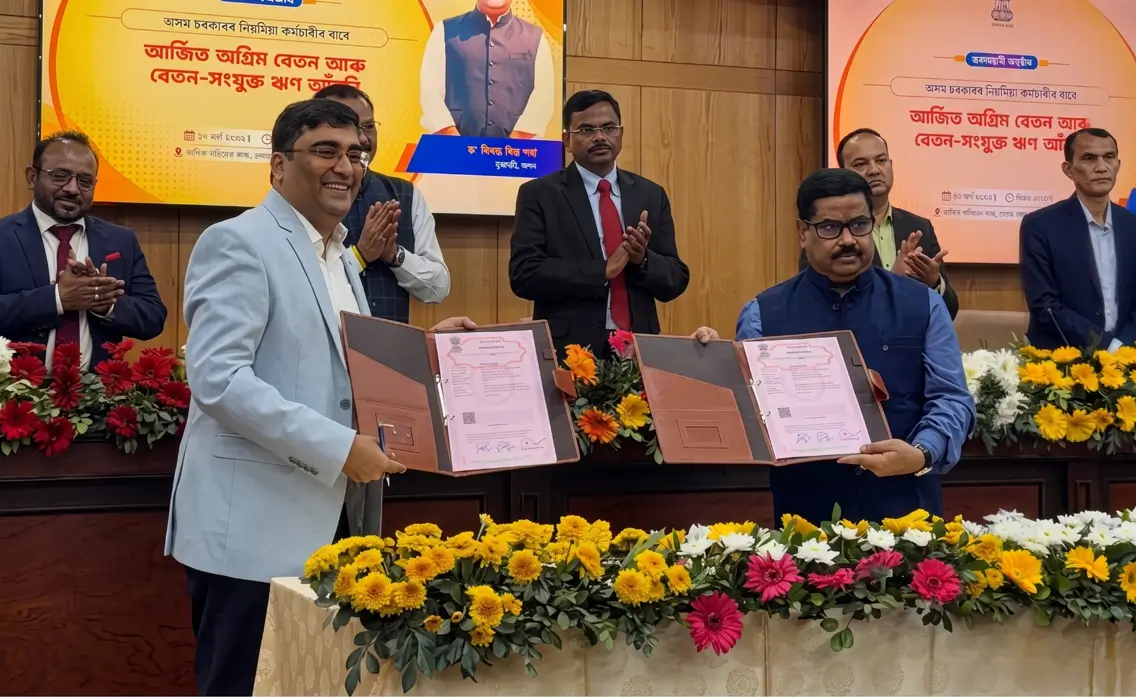
With esteemed pleasure we like to announce that AGI Money has entered into Memorandum of Understanding (MOU) with the Government of Assam, for providing Earned Salary Advance (ESA) and Salary-Linked Credit (SLC) facility to state government employees.
 011-46011578
 506, 5th Floor, World Trade Centre, Connaught Place, New Delhi-110001
 office@agiwalfinance.com